
Research Project
Escape This!
Designing digital educational escape rooms for sustainability education.
At the University of Hildesheim, students develop and test digital educational escape rooms that combine sustainability topics with game design, storytelling, problem-solving, and collaborative learning.
Teaching & Design Process
Designing Digital Educational Escape Rooms for Sustainability Education
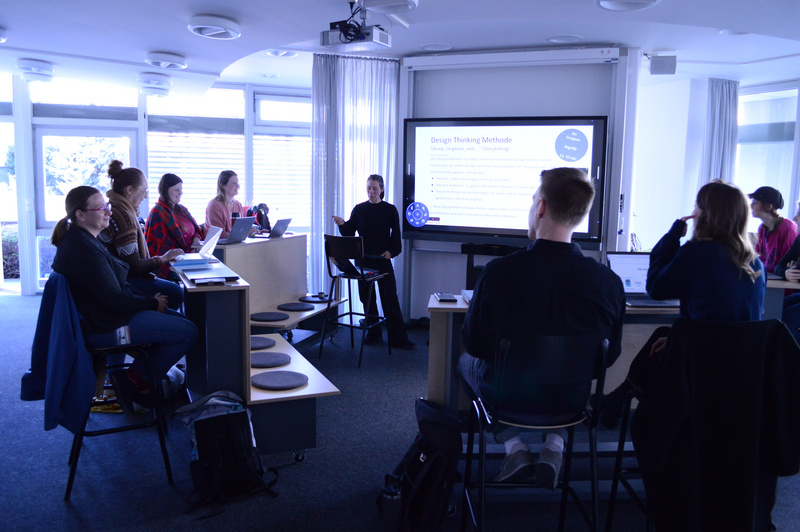
Students at the University of Hildesheim develop and test digital educational escape rooms that focus on sustainability topics. In these escape rooms, teams solve connected tasks as part of a larger mission, all within a limited time. Identifying the puzzles themselves is often part of the challenge.
While escape rooms are well established in entertainment and leisure, they are increasingly gaining ground in education. Educational escape rooms offer more than knowledge transfer: they foster interdisciplinary skills such as collaborative communication, creative thinking, and problem-solving.
The project Escape This! goes beyond using existing games. It empowers students to design their own escape games.
This process requires not only subject knowledge, but also:
- understanding target audiences and learning motivations
- breaking down complex topics into sub-tasks
- using storytelling to convey knowledge
- evaluating learning outcomes through gameplay
Project-Based Teaching
A blended learning course supports interdisciplinary student groups in designing their own escape rooms. The course combines synchronous and asynchronous teaching and focuses on integrated game design methods, sustainability content, and digital tool use.
Methods & Materials
Escape This!–Canvas and “Fortune Teller”
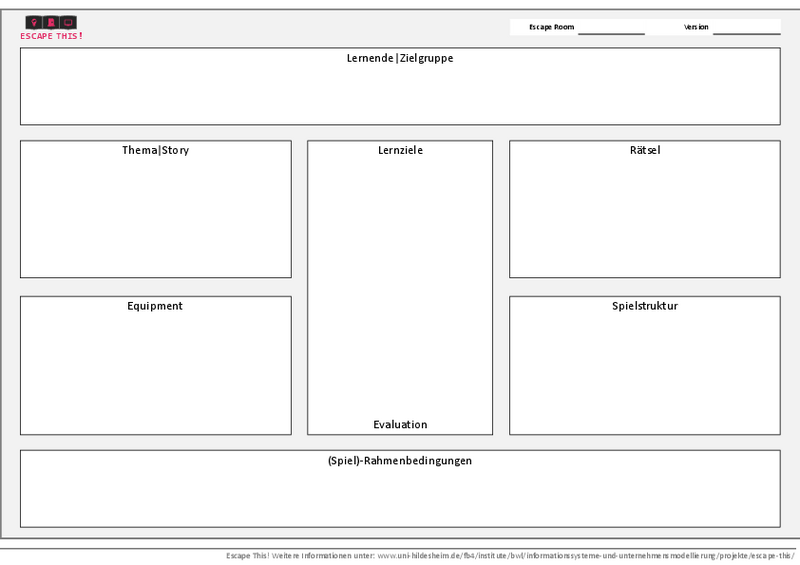
The Escape This! Canvas was developed as part of a university seminar to support students in designing Digital Educational Escape Rooms (DEERs). It serves as a visual planning tool and guides the creative process from the initial idea through to the development of concrete game structures. In the course, the canvas was used extensively to conceptualise DEERs, structure themes and meaningfully link learning objectives with puzzle mechanics.
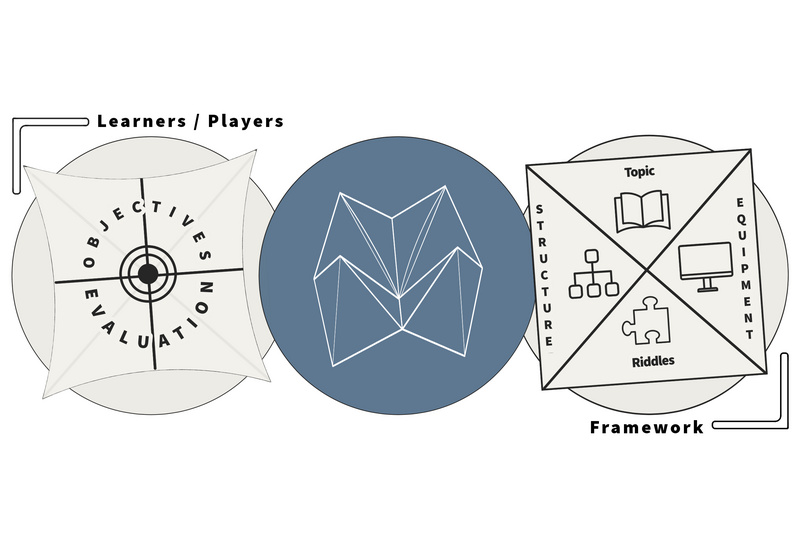
The Escape This!–Fortune Teller is a playful design tool that draws on elements of the DEER framework and combines them creatively. With the help of a foldable paper model, cards and an accompanying game board, students explore key aspects such as theme, puzzles, game structure and learning objectives. The Fortune Teller promotes collaborative work, structured thinking and inspires the creation of interactive learning experiences.
Best-Practice Examples
Best-Practice Project
Zeitreise
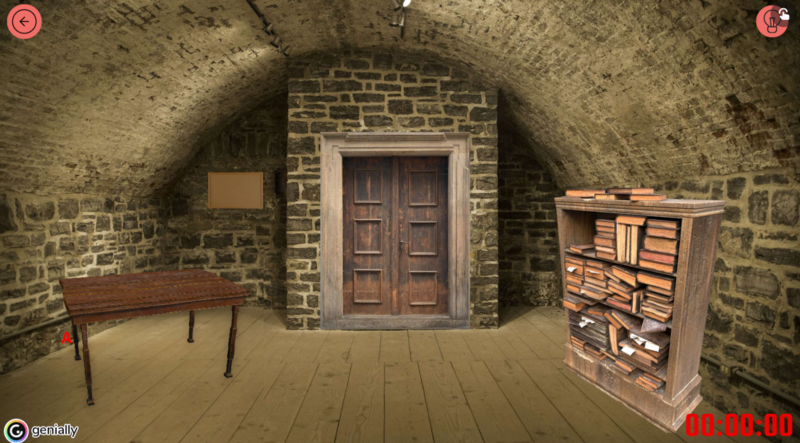
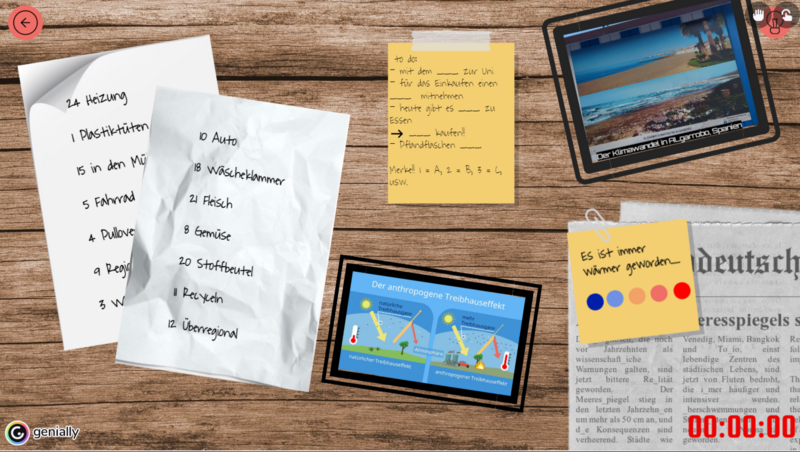
Zeitreise “Time Travel” – Climate Action (SDG 13) was developed by Sarah Cortes Czech and Rana Zeynep Erkan. A digital escape room created with Genially, featuring:
- 7 interactive puzzles
- themes such as the Paris Agreement & personal responsibility
- multimedia formats like timers, code-breaking, and visual riddles
- learning impact measured through pre- and post-game surveys
A paper about Zeitreise was published in 2026 and presented at Games for Higher Education in Lüneburg, Germany.
Best-Practice Project
Reise unter die Oberfläche
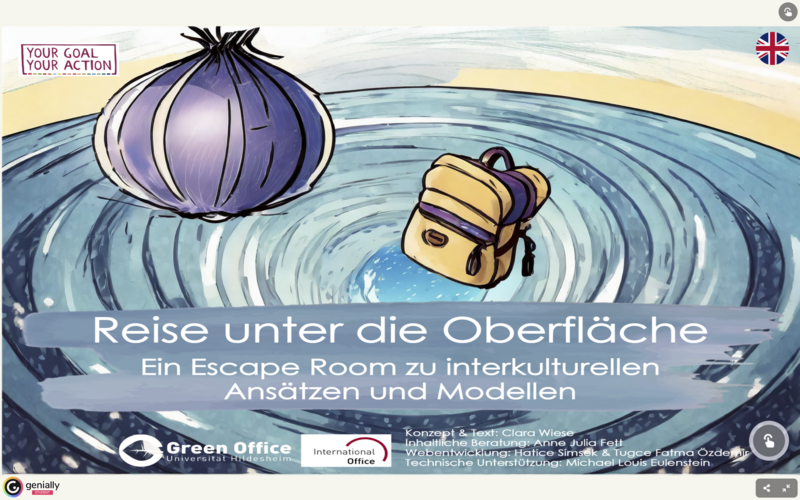
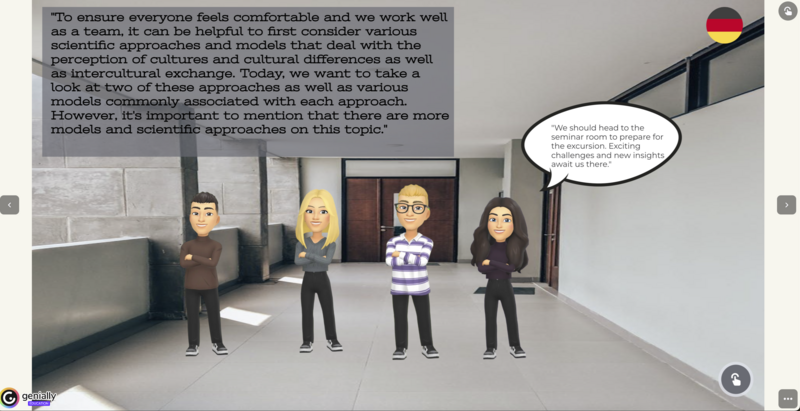
During the winter semester of 2023/24, students developed and implemented an educational escape room on the topic of “Intercultural Approaches and Models” as part of a course and in cooperation with the educational and advisory programme “Your Goal – Your Action” run by the Green Office at the University of Hildesheim.
The escape room is part of an e-learning course on working in intercultural teams and can be played free of charge in German or English via this link on the “Your Goal – Your Action” website.
The escape room is part of a larger self-learning unit created by the Green Office Hildesheim:
Best-Practice Project
KI Genesis: Der Schlüssel der Zukunft
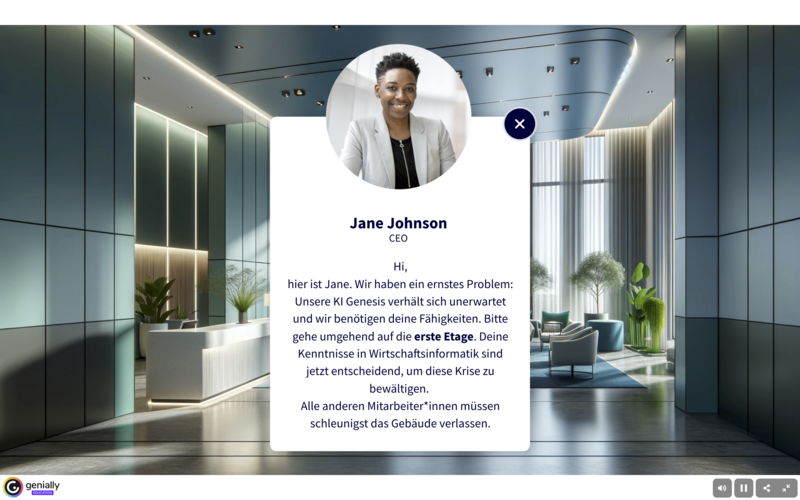
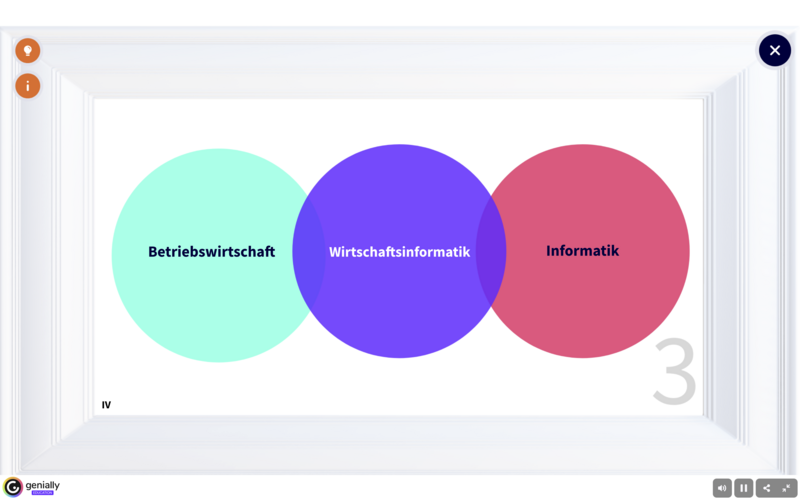
As part of her master’s thesis at the University of Hildesheim, Angela Loboda developed the digital escape room KI Genesis: Der Schlüssel der Zukunft herself.
The result was an interactive escape room designed to support prospective students in reflecting on study choices and exploring questions around higher education in a playful and engaging way.
The game was released in 2024, is available in German, and can be played free of charge in a web browser on mobile devices or computers without installation.
Explore the project here:
Ongoing Activities
Workshops & Talks
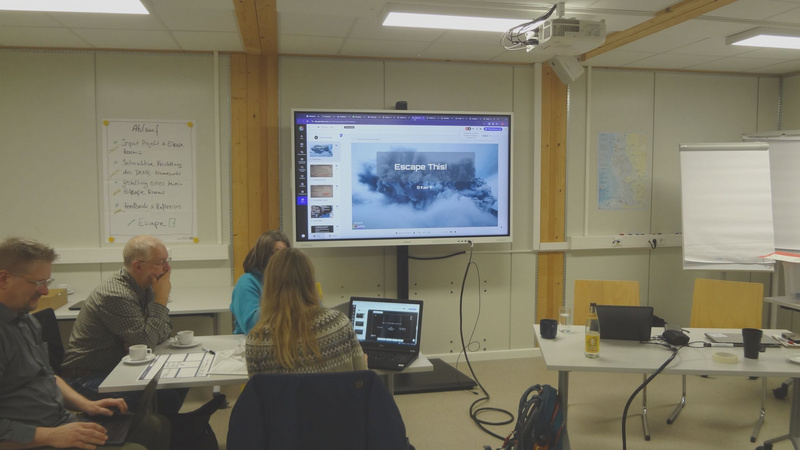
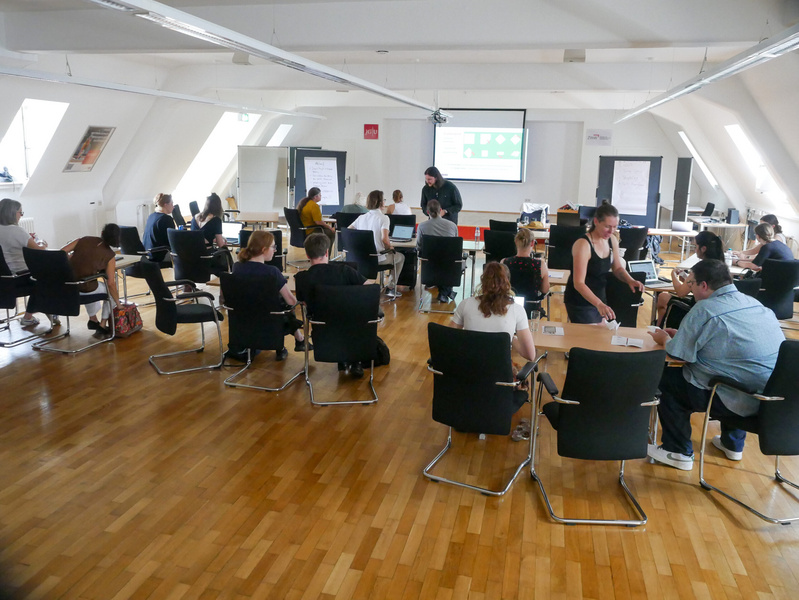
During the funding period and beyond, several workshops and talks were organised to present the results of the project Escape This! while also gathering new research data.
Past Workshops
- Mainz, 27–28 June 2024: Workshop at the ModeLL-M Conference, Johannes Gutenberg University Mainz
- Flensburg, 12 November 2024: Workshop at Europa-Universität Flensburg
- Hildesheim, 7 April 2025: Workshop “Digital Educational Escape Games as a Teaching and Learning Tool” at the LearningLab, University of Hildesheim
- Lüneburg, 19 February 2026: Opening workshop for the conference Games For Higher Education at Leuphana University Lüneburg